
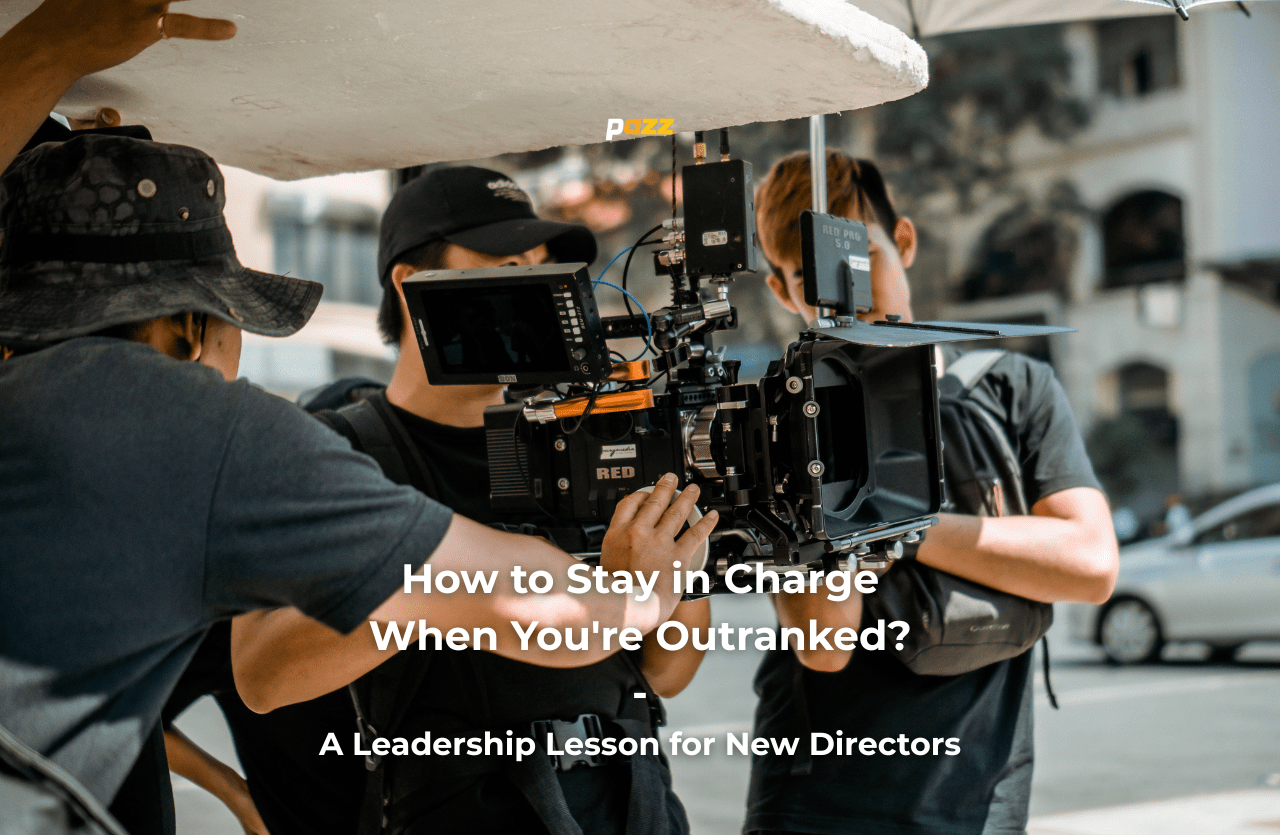
Film set leadership dynamics can make or break a production. It’s something every emerging director must confront, but few are adequately prepared for.
What happens when your creative team is more famous than you? When you are not the most experienced one, yet you are the one calling the shots? What do you do when their experience clashes with your authority?
This is a story about the complex, subtle, and often uncomfortable power struggles that happen behind the camera — and how new directors can step up to lead, even when they feel outmatched.
The Leadership Crash Course No Film School Teaches You
Film school can teach you about lenses, shot composition, and storyboarding — but it rarely prepares you for film set leadership dynamics.
When you first step on set as a director, you quickly realize that directing isn’t just about executing your creative vision. It’s about leading people. And here’s the brutal truth: directing is 20% vision, 80% leadership.
You need to manage time, navigate egos, and resolve conflicts — all while making sure your film actually gets made.
One director shared a story about his first time leading a film set. He was passionate and prepared. However, he had to face persistent, subtle undermining from an experienced team member. That crew member had more technical knowledge, more on-set experience, and he wasn’t shy about reminding everyone of it.
While his experience did contribute to the production, at the same time — whether intentionally or not — he slowly chipped away at the director’s authority. He did this in front of the crew, behind the director’s back, and even directly with the actors.
The Unspoken Rules of Film Set Leadership Dynamics
One of the most striking lessons every new director must learn is that film set leadership dynamics follow a very specific chain of command — and everyone else on set should know this too:
- The Director communicates the creative vision to the Director of Photography (DoP) and the Assistant Director (AD).
- The DoP manages the camera and lighting teams.
- The AD keeps the schedule and manages on-set operations.
- Crew members such as the Assistant Camera, Gaffer, and Electricians should report to the DoP, not directly to the Director. Production Assistants, as well as Makeup, Costume, and Hair departments, should report to the AD. Actors should communicate directly with the Director regarding creative direction but are coordinated on set by the AD.
When things are unclear, that’s when people should get together to discuss. However, when plans are clearly communicated from department heads, everyone can align easily — and problems like this should not happen often.
Certain behaviors must be avoided on set:
- Crew members speaking directly to actors without the Director or AD’s involvement.
- Challenging the Director’s decisions in front of the crew.
- Spreading rumors about the production.
Whether those intentions are good or not, they can severely damage the emotional climate and morale of the entire crew. These behaviors break the chain of command, so even if concerns are valid, the way people voice them still matters.
Yet, many first-time directors aren’t told this. They often think being “nice” and collaborative means having open, direct conversations with everyone. In reality, part of effective film set dynamics is knowing who you should talk to, and who should talk to whom.
When Collaboration Backfires: The Hidden Cost of Being „Too Nice“ on Set
Many indie and student filmmakers pride themselves on building collaborative, democratic film sets. And that’s a beautiful thing — until it isn’t.
There’s a real danger in mistaking openness for weakness.
In the story we explored, the director wanted to create a collaborative environment where everyone’s voice mattered. But that openness was weaponized by a more experienced crew member. By directly influencing other team members, gossiping behind the scenes, and stepping into a quasi-directorial role, he gradually eroded the set’s authority structure.
The result?
The director felt isolated, second-guessed their own decisions, and lost valuable time navigating interpersonal landmines.
This is a common trap for new directors: they often try to lead by being approachable, accommodating, and overly helpful. Of course, helping is always a kind gesture and can build good team spirit — but in the context of film set leadership dynamics, it can inadvertently undermine your perceived authority.
When you try to be everyone’s friend, you leave gaps that more dominant personalities will fill. That doesn’t mean you should be cold or arrogant — but you must lead with clarity, not just kindness.
Collaboration is essential, but hierarchy exists for a reason.
Without it, creative vision can easily get hijacked by louder, more experienced voices.
The key is balance:
You can foster a respectful, collaborative atmosphere while still commanding authority and protecting your role as the creative lead. Being too “nice” on set shouldn’t come at the expense of your leadership.
The Invisible Labor of the Director: Managing Emotions and Expectations
You’ve probably heard this: Directing isn’t just about calling “Action!” It’s about emotional labor.
Yes, on set, you’re not only responsible for the creative product — you’re responsible for the emotional climate. You’re the one managing your own self-doubt, the cast’s confidence, the crew’s morale, and, at times, the egos of all kinds of people.
For women and marginalized directors, this emotional balancing act is even more exhausting. They often face extra scrutiny for being “too assertive” or “not assertive enough.” The unspoken biases on set, unfortunately, often allow experienced crew members to overstep with impunity.
As we can see, film set leadership dynamics become more complicated when layered with gender, race, and power. These aren’t just creative spaces — they’re social spaces where systemic behaviors play out.
Why Some People Undermine You Quietly (And How to Spot It Early)
The real danger isn’t always the person yelling at you. It’s the one quietly sabotaging you behind your back. As described, the director’s credibility can slowly undermined by
- Backhanded comments.
- Gossiping about pay discrepancies.
- Publicly advising actors in ways that contradicted the director’s instructions.
- Dismissing offers of help, then complaining about lack of help.
These are subtle but powerful red flags.
By the time the director fully realized what was happening, the damage to their authority had already taken root.
Therefore, when navigating film set leadership dynamics, spotting these behaviors early can prevent a lot of unnecessary harm. Trust your gut.
(And yes, you might wonder: What if I’m being oversensitive?)
If someone’s behavior consistently leaves you doubting yourself, undermines you in front of the crew, or disregards the chain of command — it’s a sign, not an overreaction.
Can You Afford to Fire People on Low-Budget Sets?
On big-budget productions, disruptive crew members get replaced quickly. On small indie or student films? It’s not so simple.
Many directors face a painful dilemma: They know a particular crew member is toxic, but his technical contributions are saving the production.
This is a brutal decision that every low-budget filmmaker dreads:
- Can you afford to fire someone when you can’t afford to replace them?
- Will losing a skilled crew member tank your shoot, or will keeping them kill your morale?
There’s no easy answer.
Sometimes, you need to finish the project, learn the hard lesson, and never work with that person again. Sometimes, you recognize that this person did valuable work, but their approach was wrong — and with honest communication, you can still keep them as a long-term collaborator.
But other times, you must cut them loose immediately to protect your crew and your film.
Film set leadership dynamics mean knowing when to fight for your vision, and when to prioritize the health of your team.
Leadership Lessons for New Directors
Here’s what teaches us about surviving and thriving in the high-pressure world of filmmaking:
- Chain of Command Matters: Respect it, enforce it.
- Spot Undermining Early: Subtle sabotage is still sabotage.
- Kindness Isn’t Authority: You can be kind and still command respect.
- Set Emotional Boundaries: You can’t carry everyone’s feelings.
- Be Ready to Fire if Necessary: Even when it’s inconvenient — but always have a plan B.
- Lead with Preparation: The crew respects a director who knows what they want.
- Trust Your Gut: If something feels off, it probably is.
Film Set Leadership Dynamics Are Hard — But You’re Not Alone
No one walks onto their first set as a perfect leader. Film set leadership dynamics are complex, messy, and often emotionally draining.
But these experiences — the power struggles, the moments of doubt, the lessons learned in real time — are what shape you into the kind of director people want to follow.
You don’t have to get it right every time. You just have to keep learning, keep protecting your vision, and keep showing up.
Kommentar verfassen